Personal project · Proof of concept · 2026
Career Command: one dashboard, three roles, and an AI that asks first
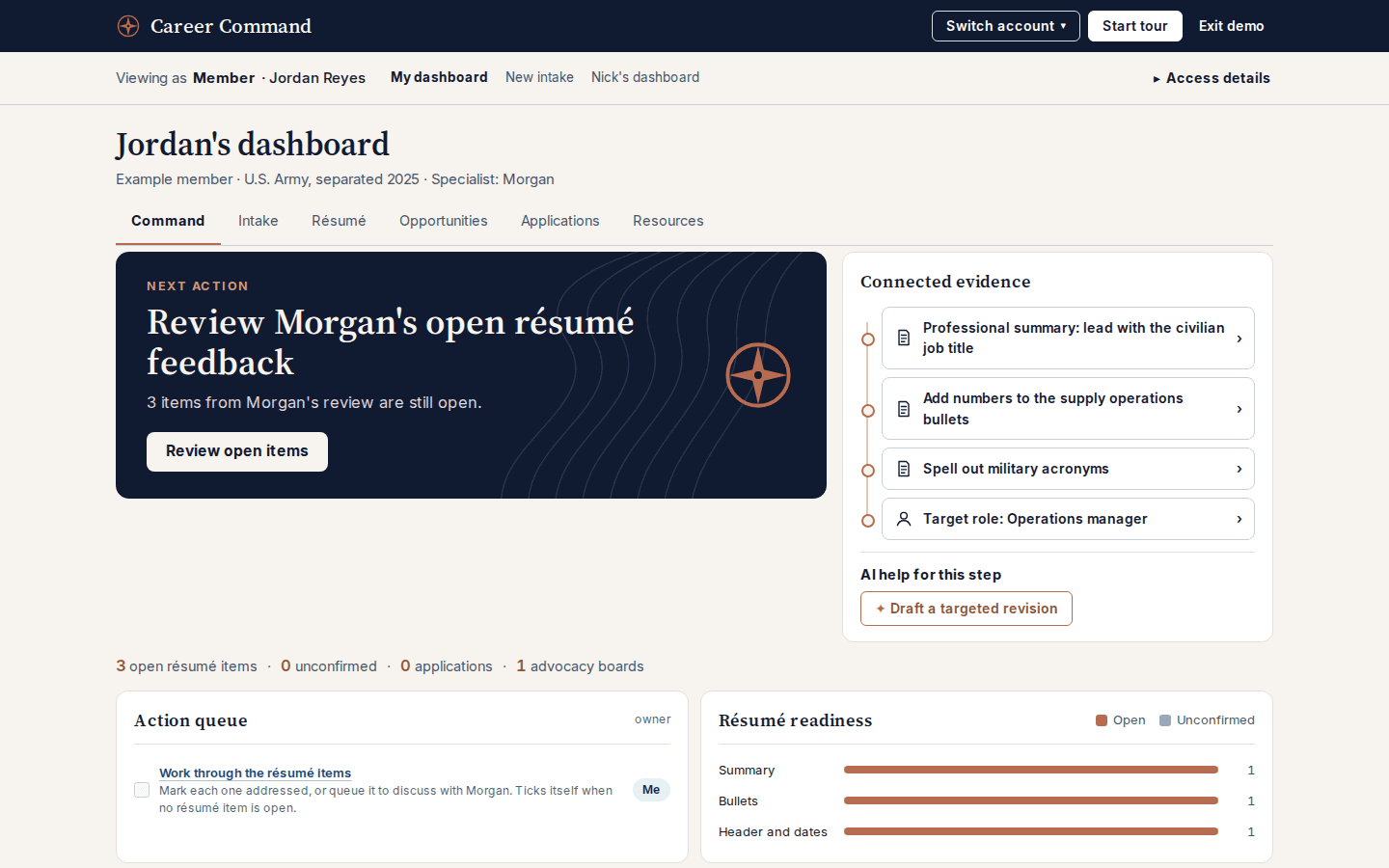
My career specialist sent me thoughtful résumé feedback and a long list of resources by email. I built a dashboard to actually put it to work, then rebuilt it so any veteran and their specialist could share one. The member runs their search from it; the specialist sees only the members assigned to them, and what's waiting on them.
What I built
The member and the specialist work from the same records, but they shouldn't see the same things. Most of the work went into making that rule hold everywhere, including when an AI helper is the one asking.
- Sign-in through Okta with OpenID Connect and PKCE, kept in an encrypted, 8-hour session cookie. Three Okta groups map to three roles: member, specialist, and admin. Anyone outside those groups can't sign in at all.
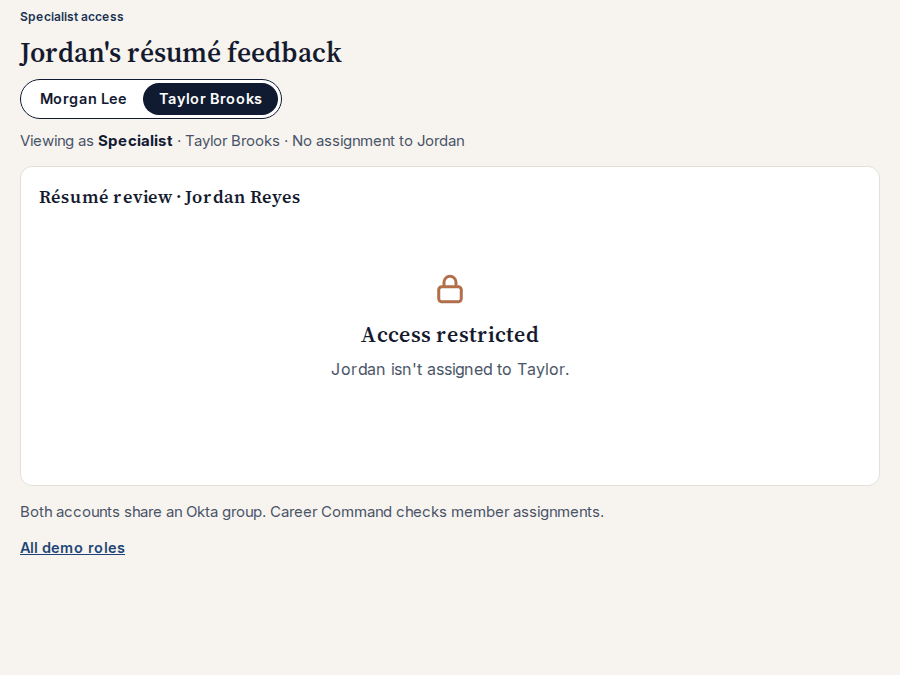
- One permission check that every page, server action, API route, and AI tool goes through. Okta says what role you have; the app decides which members that role covers, so a specialist opens only the members assigned to them.
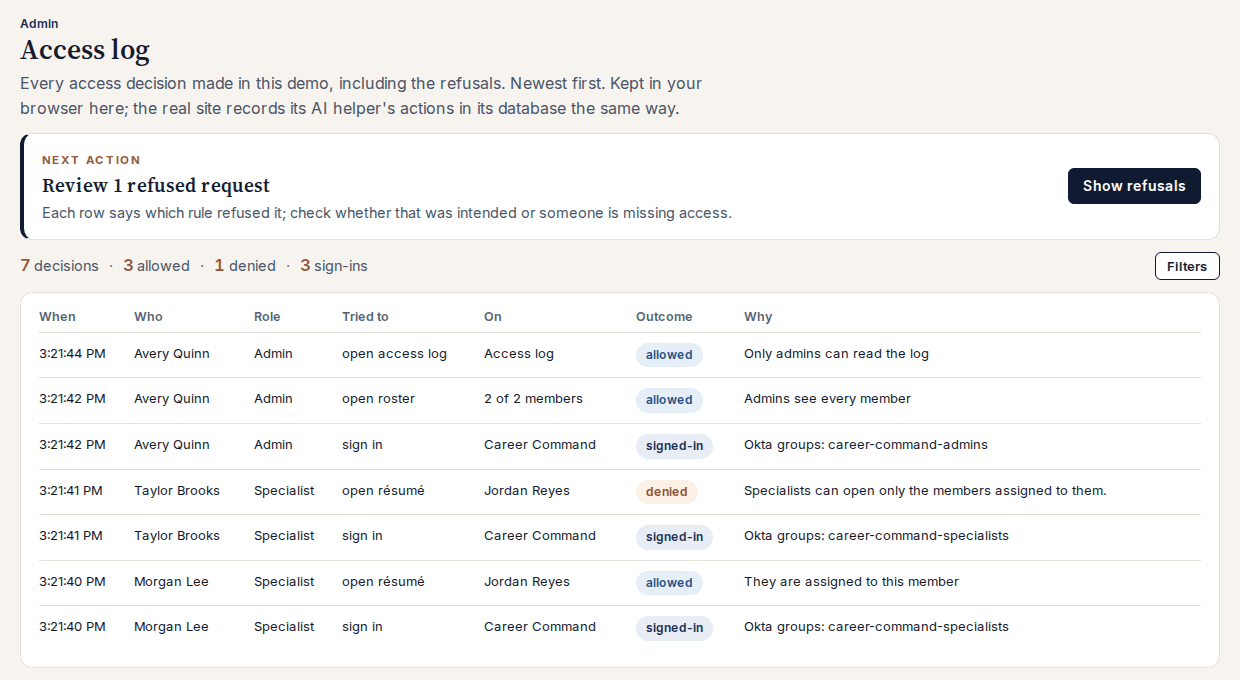
- An agent gateway for the AI helpers. Each call is checked against the signed-in person's permissions, the helper's own list of allowed tools, and a rate limit, then written to an audit log. The model never chooses whose data it touches; the server pins that.
- Changes the AI suggests show up as Confirm or Cancel cards, and only the person it acted for can confirm them. Testing caught the model picking the wrong review item, so the cards now show the item's title, never an internal ID.
- A read-only Notion sync of my job applications, with a field allowlist so pay, contacts, and fit ratings never leave the server.
- Every count on a dashboard comes from one tested module, and a specialist's feedback is always labeled apart from the member's own notes.
- A public guided demo with made-up accounts and a simulated sign-in, running on the real access rules, plus an admin access log that records every decision, including the refusals.
Worth knowing
It's a proof of concept with one real member so far: me. The guided demo is the quickest way to see every role, and it doesn't need an account.
I used Claude Code to build it, and OpenAI models run the helpers. I designed it, tested it with real sign-ins, and I'm the one accountable for what it does.